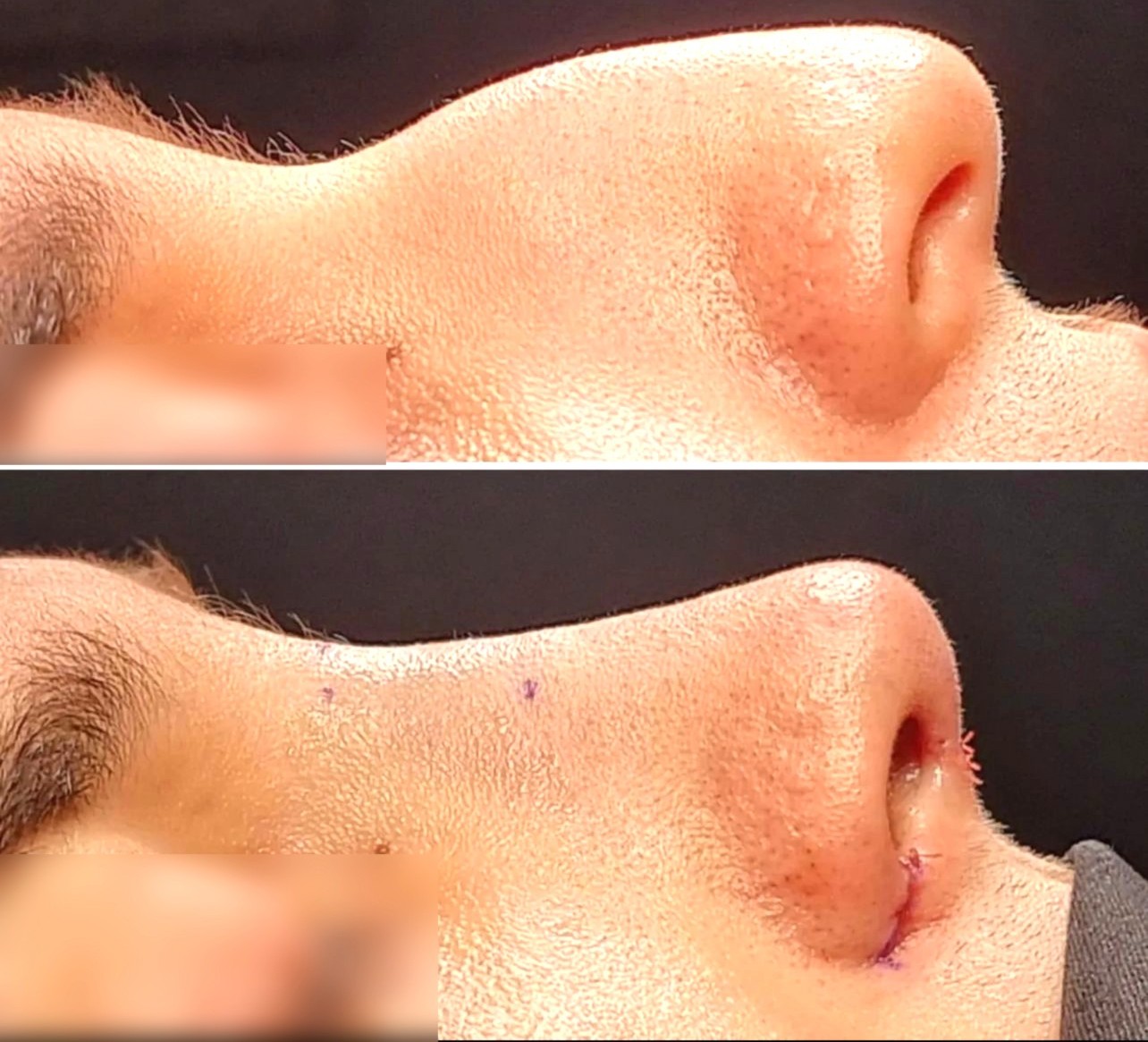
Rhinoplasty, also known as a nose job, is a cosmetic surgical procedure aimed at changing the size, shape, or proportions of the nose in order to improve both its appearance and function. It can address aesthetic concerns such as a nose that appears too large or too small, a crooked shape, or irregularities (such as a hump or a depression on the nasal bridge), while also helping to alleviate breathing difficulties caused by structural abnormalities.
Septoplasty, also referred to as nasal septum surgery, is a surgical procedure primarily focused on correcting a deviated nasal septum and improving airway function. It helps address issues such as impaired breathing, frequent nasal congestion, recurrent sinus infections, or snoring, thereby enhancing overall breathing comfort and sleep quality. Unlike rhinoplasty, septoplasty mainly focuses on functional improvement, although in some cases both procedures may be combined.
A rhinoplasty procedure typically involves making incisions either inside the nostrils or across the tissue between them. Through these openings, the surgeon accesses the underlying bones and cartilage, which are then reshaped, removed, or repositioned to achieve the desired aesthetic and functional result. In some cases, additional tissue may be used to strengthen or support the nasal structure.
Septoplasty is usually performed through an incision inside the nose, without any visible external scars. During the procedure, the surgeon focuses on the nasal septum, straightening it by removing or reshaping the deviated portions of cartilage and bone, thereby improving airway function. After the necessary adjustments are made, the incisions are closed with sutures, and temporary nasal packing or splints may be placed to stabilize the septum and support proper healing. In some cases, both procedures can be combined into a single operation.
When meeting with your surgeon, it is important to share information about your lifestyle, as well as any medications, vitamins, or dietary supplements you are currently taking. These details may affect both the treatment plan and the length of your recovery.
After nose reshaping surgery (rhinoplasty) as well as septoplasty, patients can typically expect some swelling, mild bruising, and discomfort, which can be managed with analgesics and cold compresses. In septoplasty, bruising is usually less pronounced, as the procedure is primarily performed inside the nose.
It is generally recommended to avoid strenuous activities and to rest with the head elevated during the first week after surgery. After rhinoplasty, a splint is usually placed on the nose, while after septoplasty, nasal packing or internal splints may be temporarily inserted to stabilize the septum. These supports, along with any sutures, are typically removed within one to two weeks.
Some swelling may persist for several weeks, and in the case of rhinoplasty, even longer depending on the extent of the procedure. However, most patients can return to work or school within approximately 7 to 10 days, often sooner after septoplasty.
Careful adherence to the surgeon’s postoperative instructions is essential for proper healing, restoration of full nasal function, and minimizing the risk of complications.
Rhinoplasty and septoplasty are common and generally safe surgical procedures involving the nose. However, as with any surgery, there are certain risks and potential complications that should be considered.
After the procedure, common and temporary effects may occur, such as swelling, bruising, mild pain, or temporary numbness in the nasal area. These symptoms usually subside within one to two weeks, although some swelling after rhinoplasty may persist longer.
Less common complications may include:
- excessive bleeding
- infection
- prolonged healing
- temporary or, in rare cases, permanent loss of sensation
In septoplasty, specific complications may rarely occur, such as perforation of the nasal septum or persistent breathing difficulties. In rhinoplasty, there is also a risk of dissatisfaction with the aesthetic result or the need for revision surgery.
Careful adherence to postoperative instructions and choosing an experienced surgeon significantly reduce the risk of complications and contribute to a successful outcome.