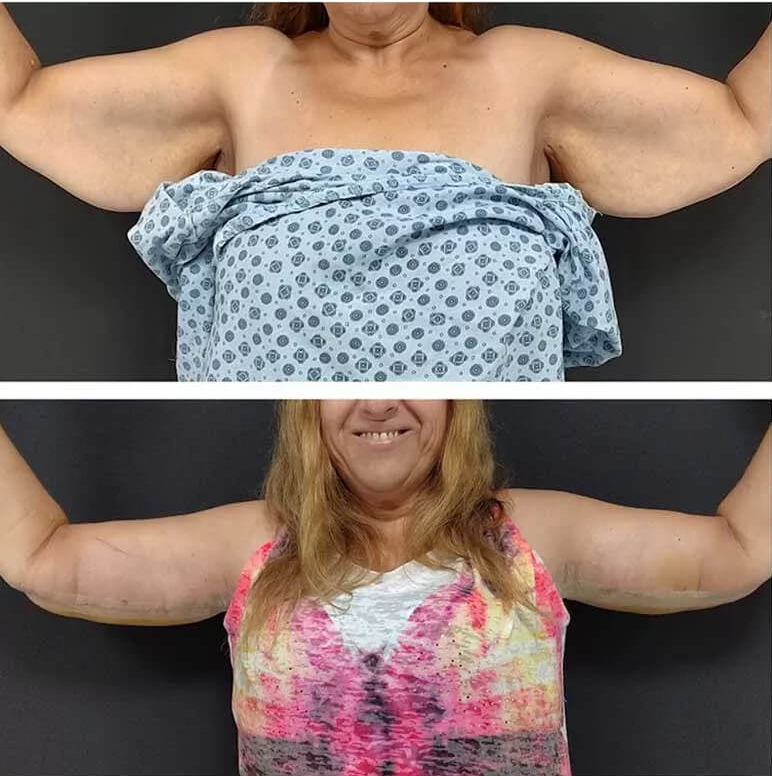
An arm lift is a surgical procedure used to remove excess skin and fat from the upper arms.
As a result of ageing or significant weight loss, the skin in the upper arm area can become loose, and diet or exercise may no longer be enough to improve its appearance. In such cases, an arm lift may be worth considering, as it can give the arms a firmer, more youthful look and make everyday movement feel more comfortable without excess hanging skin.
During an arm lift procedure, the surgeon makes incisions on the inner or back side of the arms, removes excess skin and fat, and tightens the underlying tissue. The size and shape of the incision depend on how much loose skin and tissue need to be removed. In milder cases, an incision placed only in the underarm area may be enough.
The surgeon will provide detailed instructions on how to prepare for the procedure, including advice on diet, smoking cessation, and the use of medication. It is important to follow these recommendations carefully, as any infection, especially a skin infection, could lead to the surgery being postponed.
Patients with high blood pressure should inform their surgeon before the operation. To help reduce the risk of post-operative bleeding, it is generally recommended to avoid Aspirin and any medication containing Aspirin or ibuprofen for two weeks before the procedure.
Clear communication with the surgeon is essential. Explaining your expectations and desired result as precisely as possible will help the surgeon determine what can realistically be achieved.
During the first few days after an arm lift, patients may experience pain, swelling, and bruising, which can usually be managed with pain relief medication and compression garments.
It is important to avoid strenuous activity and heavy lifting for several weeks so the incisions can heal properly. Patients are also encouraged to follow a healthy diet and stay well hydrated to support recovery.
With proper care and by following post-operative instructions closely, most patients can expect to notice a significant improvement in the appearance of their arms within a few weeks to a few months after surgery.
Some of the more common risks include bleeding, infection, reactions to anaesthesia, scarring, and numbness or tingling in the arms.In rare cases, patients may also experience blood clots, nerve damage, or delayed wound healing.
Following all pre-operative and post-operative instructions provided by the surgeon is important for reducing the risk of complications.
Before and after